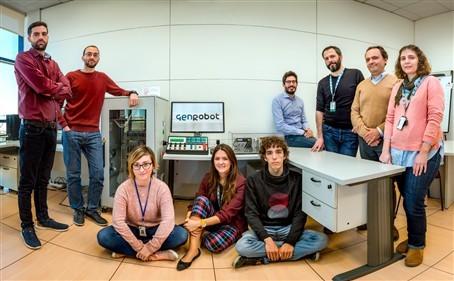
GENROBOT, the advanced robotics software developed by GTD in collaboration with Fusion for Energy (F4E), will be a core element of Europe’s contribution to the ITER Remote Handling systems, enabling safe and precise maintenance operations inside the world’s largest fusion device.
ITER: One of the Most Complex Scientific Projects Ever Built
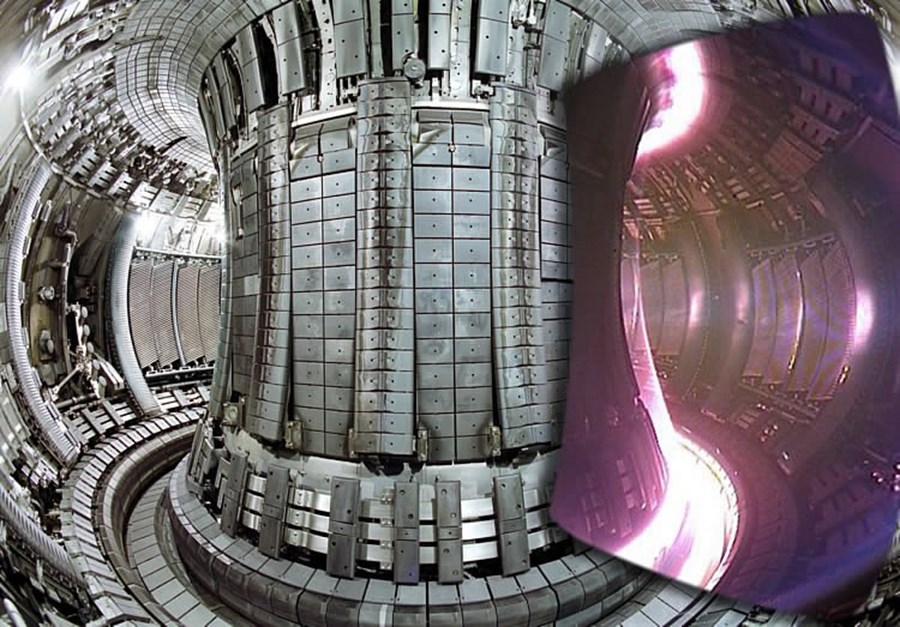
ITER, the biggest fusion experiment currently under construction, includes at least one million main components. When subcomponents and their multiple interfaces are added, the scale and complexity place ITER among the most ambitious scientific and engineering projects in history.
Engineers working on ITER face major challenges:
- Manufacturing unique, one-of-a-kind equipment
- Seamlessly assembling highly complex systems
- Operating them safely in extreme, radiation-intensive environments
Because humans cannot physically enter ITER’s massive vessel, all inspection, repair, movement and replacement tasks must be performed remotely.
Remote Handling Systems: Robotics for Extreme Conditions
The ITER Remote Handling system integrates advanced robotics and tooling required to operate in high-radiation environments. Teams from Europe and Japan, together with industry and research laboratories, are developing:
- Manipulators
- Movers
- Cranes
- Actuators
These man-in-the-loop robotic systems must operate with extreme precision and coordination. Like a carefully choreographed performance, each machine must “dance” to the same operational logic and communicate in a shared coded language.
From GENERIS to GENROBOT: A European Robotics Innovation
The origins of GENROBOT trace back to the European Commission’s Joint Research Centre (JRC) in Ispra, Italy, where the software platform GENERIS was first developed.
The project was led by F4E’s Emilio Ruiz Morales, who at the time was working at JRC. The initiative leveraged EU-funded R&D projects in areas such as:
- Mobile robotics for nuclear storage surveying
- Telerobotic surgery with tactile feedback
Building on GENERIS, F4E and GTD developed GENROBOT, a next-generation industrial software platform tailored to the demanding requirements of ITER’s Remote Handling systems.
A Harmonized, Safety-Critical Robotics Software Platform
GENROBOT enables the adaptation and configuration of various robotic systems so they can operate as part of a unified European Remote Handling architecture.
“This software allows us to install a sense of harmony in the operating system and to rigorously control all ITER Remote Handling machines that Europe has to manufacture,” explains Emilio Ruiz Morales.
Key benefits of GENROBOT include:
- Adaptability across multiple robotic platforms
- Time and cost savings
- Industrial-grade robustness
- Compliance with SIL-2 IEC 61508 safety standards
The development of a SIL-2 compliant industrial robotics software represents a significant step forward in safety-critical automation systems.
Innovation Beyond Fusion Energy
Carlo Damiani, Head of ITER Remote Handling systems at F4E, highlights how ITER’s demanding environment drives technological advancement.
“First, we need to carry out a meticulous analysis of the state-of-the-art and then decide whether to invest further in R&D. In the case of GENROBOT, we made excellent use of EU-funded research. With further investment, we developed innovative software that suits our needs and potentially those of other sectors using remote applications such as nuclear decommissioning, defense, medicine and space.”
GENROBOT’s architecture and safety framework make it transferable to other high-risk, remote-operation industries.
GTD Expands into the Robotics Market
For GTD, GENROBOT marks a strategic milestone in entering the robotics market through its expertise in safety-critical software engineering.
“GENROBOT allowed us to enter the robotics market by contributing through our expertise in safety-critical software. It has been an interesting journey that helped us acquire new capabilities and step out of our comfort zone,” says Alejandro Cantos, GTD Robotics Manager.
The experience positions GTD to leverage its know-how in future robotics and remote-operation projects across multiple sectors.
Final Testing and Deployment at ITER Facility
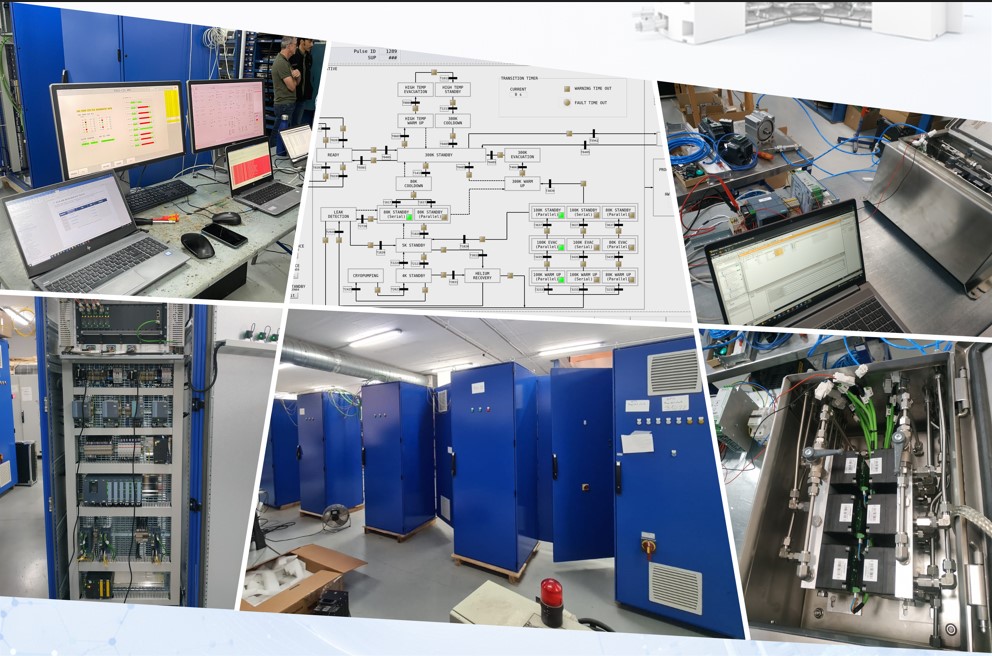
The testing phase of GENROBOT at GTD’s facilities in Madrid is nearing completion. Further fine-tuning is scheduled before deployment.
The software will then be transferred to ITER’s Remote Handling Facility in Tampere, Finland, where experts will receive training and conduct tests at the Divertor Test Platform (DTP2).
GENROBOT will play a critical role in ensuring Europe’s Remote Handling systems operate reliably within ITER — a project widely regarded as one of the most important energy initiatives of our time.

.png)
.jpg)