Publications in Acta Astronautica
Presentations at IAC
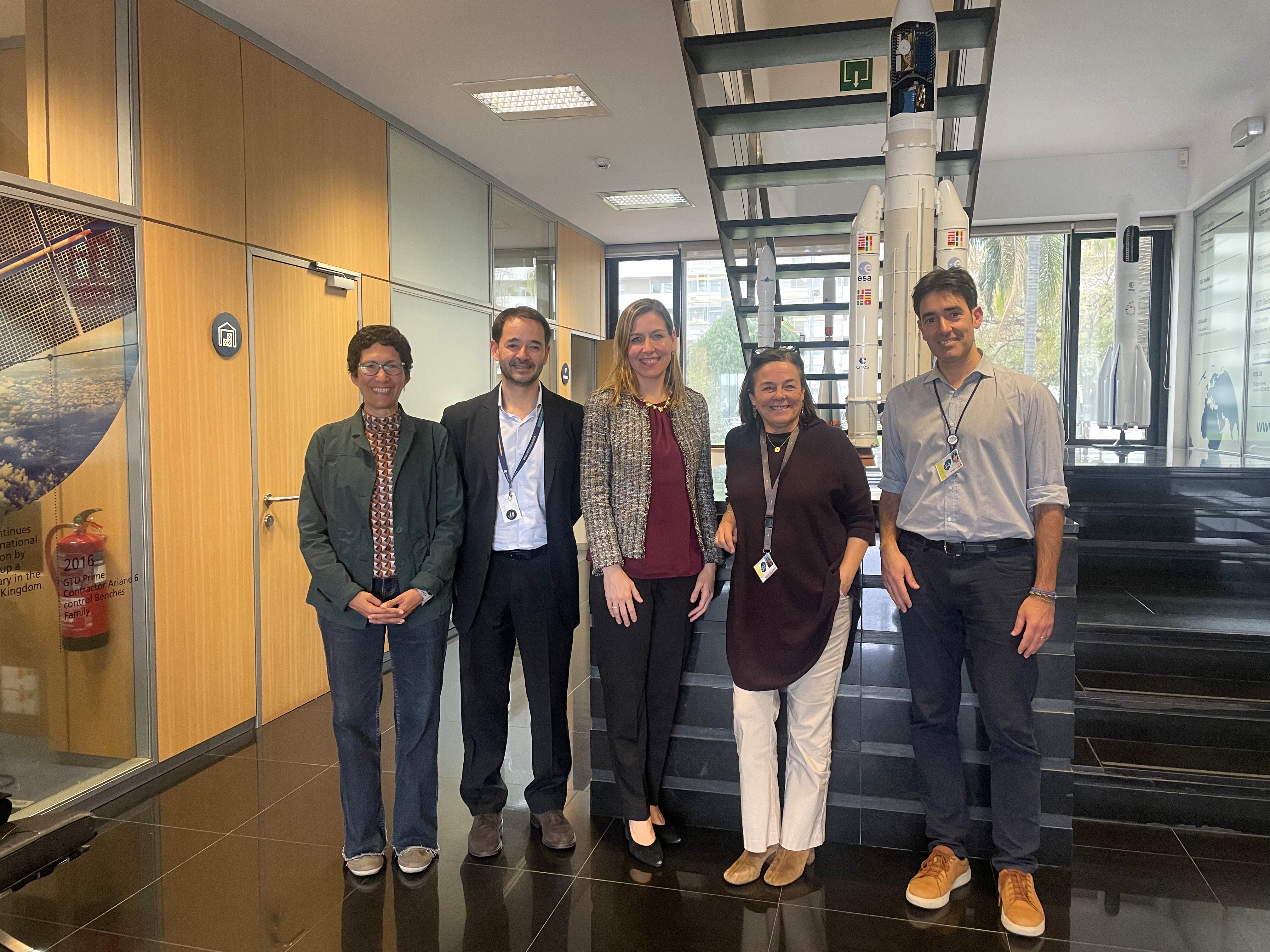
Committee with ESA and TU Delft members
How does a software engineer become GTD's first industrial PhD? What obstacles did he face? And why does autonomous flight safety matter for the future of reusable launchers? We spoke with Alejandro Sabán about his journey, the challenges of balancing research with daily projects, and how his work is putting GTD on the map in European space research.

Alejandro Sabán (Barcelona, 1996) is a Aerospace Systems & Software Engineer at GTD and has completed the company's first industrial doctorate, focused on Autonomous Flight Safety Systems (AFSS) within the European SALTO project. His research, available at TDX (Tesis Doctorals en Xarxa) and published in Acta Astronautica, addresses one of New Space's biggest challenges: how to ensure flight safety in reusable launchers with high cadence and reduced operational costs.
Industrial PhDs allow researchers to combine academic work with real-world applications. Alejandro shares how he structured his doctorate at GTD to benefit both his research and the company's operations.
Alejandro: During my academic career, I found research genuinely interesting and developed a long-term interest in pursuing a PhD. I started at GTD as a master's intern, and when I finished my master's, I joined the staff. While working there, I saw that the company could offer the opportunity to do a PhD thanks to the R&D projects it carries out through different European programs like Horizon Europe.
I discovered there was a partial modality: you're not 100% dedicated to the doctoral thesis but rather fifty percent, and the other fifty percent you can dedicate to other company projects. The PhD was linked to the SALTO project, which became the research focus. That's what I've been doing. I've been working on SALTO, but in parallel I've been at Andøya, at Esrange, and on bids.
This way, GTD didn't lose control over my activities. The only one receiving funding was the doctoral candidate for tuition and mobility. Neither the university nor the company received money. It's more of a strategic arrangement. I wanted to do the PhD at the company without it harming operations, and in the end, this formula worked for everyone. I could continue contributing to all the projects while pursuing research.
Alejandro: GTD's role was like any Horizon Europe project. The project is within SALTO, which is a collaboration between companies and institutions. We were in work package 11.6. My work was the entire technical management part of the project: making all the technical decisions, the system proposal, implementation. It's one more project for them. It's like SAMMBA, ENVOL, like all these projects.
Alejandro: Mainly, the research was done at GTD. The university provided feedback at a more academic level, on how to do the thesis. And then some contacts we had for AI topics, to see what AI functions we could integrate, but in the end we didn't integrate any due to certification issues.
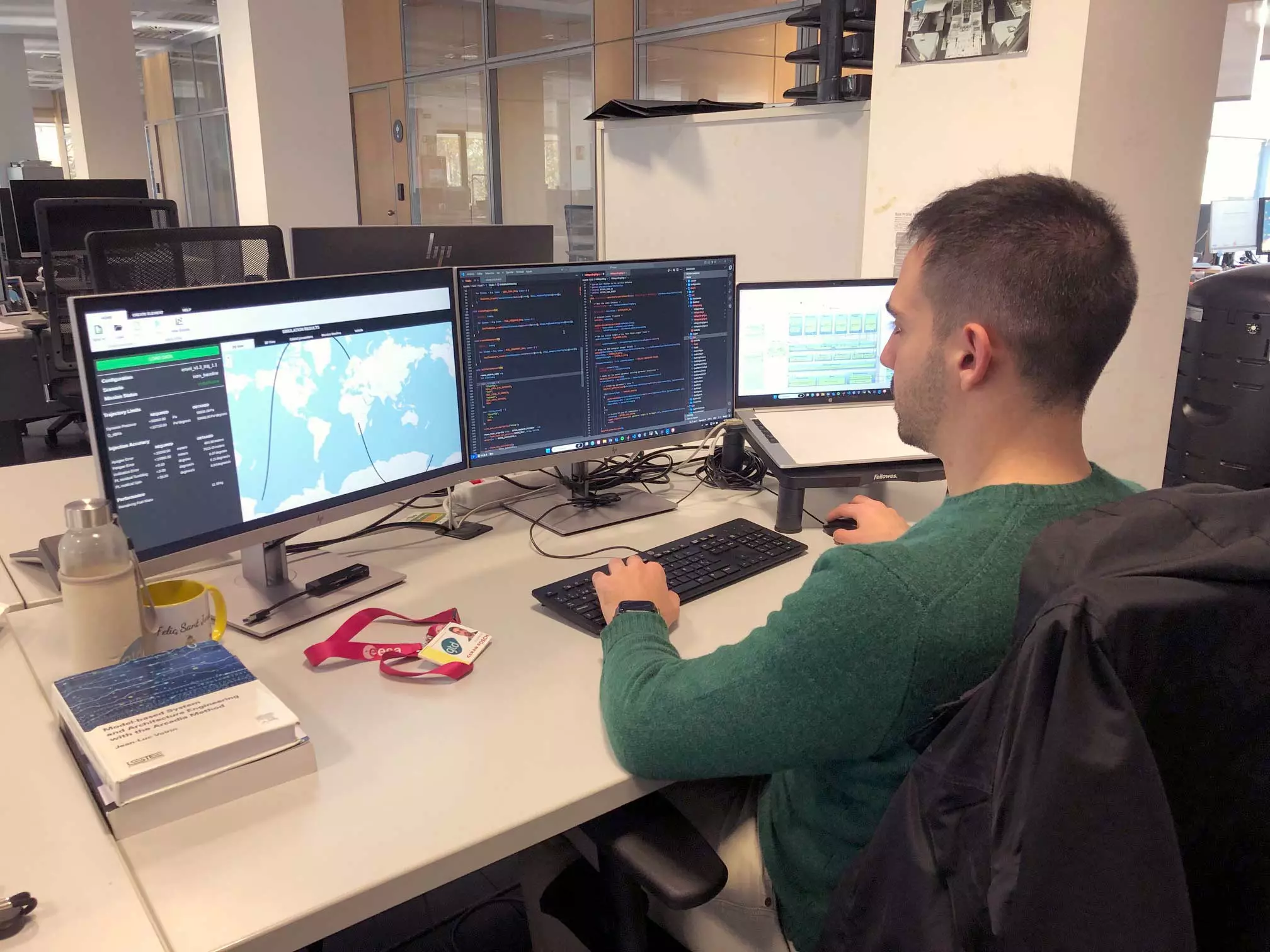
Alejandro: What it has allowed is to make visible the work being done and even capture the attention of a person from ESA and a former ESA worker who is now at TU Delft to be part of the thesis committee. And just now, the one from ESA told us that an ITT will come out that might interest us.
A derived project might come out. It has been a way to make visible what we do: "Listen, we're doing this, we work on this."
"When you go to a conference like IAC, all the big companies in the sector are there. If you make visible the work done, other actors see what you do and say: 'Ah, GTD does this.' Which is something we lack at GTD."
Alejandro: The other day the other companies told us: "On your website, you don't see all the projects you do, but from what you tell us, you do many things that we were unaware of, and we didn't know about your capabilities in some things." So it's also another way to publicize the work done at the company. And the capabilities it has.
Publications in journals and conferences make visible the work you do. It's quite important within the community because when you go to a conference, especially at conferences like IAC, all the big companies in the sector are there. So if you make visible the work done, you have the possibility that other actors see the work you do and say: "Wow, I need to do this." And then they think: "Ah, GTD does this."
Alejandro: This type of system, flight safety, is necessary for any mission. Until now it's something additional, where you have a person on the ground monitoring and pressing a button.
Until now this has worked great because we had expendable vehicles. We had needs that with a ground operator and the ground systems you have, they work fine.
What happens when you scale this up to having a more frequent cadence and you want to lower operational costs, which is one of the things the industry is demanding? Here you start to find problems: if you increase the cadence, between campaigns you need a configuration period for all ground systems and operator training. Here you already have a bottleneck in the systems.
Then, at the operational cost level, you have a high cost derived from all the ground infrastructure you have. You have radars distributed everywhere. You have telemetry stations distributed, and telecommand. You need to have direct line of sight with the launcher to be able to track the mission for safety reasons.
To the point that even the number of orbits that can be used at a spaceport can be reduced simply because you don't have ground infrastructure. If you're in French Guiana, you can launch toward any azimuth, you can launch in any orbit range, in theory. But when they started northern operations, they had to install a new radar. This was a limiting factor at the time. A development cost for installing the new radar and having more infrastructure, which increased operational costs.So if you want to reduce costs, you need to try to reduce the simple infrastructure, the dependence on ground infrastructure.
"You have radars distributed everywhere, telemetry stations, telecommand... All this increases operational costs. If you want to reduce costs, you need to reduce dependence on ground infrastructure."
Three key challenges of current systems:
Alejandro: With reusables, current systems weren't designed to be able to neutralize multiple stages. We have a stage entering toward Earth, either toward the spaceport or toward a floating platform at sea, like SpaceX does, and you have a stage that's ascending. You need to neutralize either of the two elements in case it poses a danger to safety. So there's also this need for reusable operations.
Hence the need to have an autonomous system that is independent of any external system—with the launcher's own subsystems you're able to guarantee flight safety. In this way, you no longer have ground infrastructure. And you increase orbit flexibility. Reduced cost and flexibility.
And if you have two stages, you integrate one of these systems in each of the stages and the moment they separate, they behave as two independent vehicles. Each system monitors each vehicle, each stage. That's the need for this type.
Alejandro: We within the project have proposed an incremental validation strategy. First validate everything on ground, in a ground system, where all the launcher data is received—mainly what's onboard the launcher from navigation—do all the data processing, all the algorithm calculation, and make the decision, which, being on ground, you need to send to the telecommand system.
At the infrastructure level there's no reduction, but what it allows you is to automate all the decisions, you eliminate the need for operators, and you make the system able to respond faster, since you don't have latency due to operators, displays, etc.
"The future doesn't go through this approach, it goes through embedding it, as SpaceX already does. But we can't jump directly to doing an onboard, because it's a risk."
The plan:
Alejandro: First we decided to validate it on ground, which is what we proposed in the project, so that later, once everything that is the architecture, the algorithms, and everything is validated, then embed it in equipment that is already qualified for space. Then increase the readiness level of the launcher or the equipment and be able to embed it directly.
Alejandro: When you do a PhD between the university and the company there's a knowledge transfer from the university, from all the cutting-edge research they're doing.
The reality is that universities conduct the most cutting-edge research, largely supported by European funds. Companies also do important research, but typically focused on very specific applications within their field of interest. Universities work across a broader spectrum: "We study these AI algorithms..." while a company might say: "We need to implement AI for failure detection."
This creates an opportunity to establish dialogue with universities: "What have you been studying? What do you think could serve our application?" When there's synergy and collaboration between university and company, it becomes quite valuable. That's why industrial PhDs play such a key role in bridging this gap.
This project is part of the Industrial Doctorate Program of Catalonia.
Alejandro's model, partial dedication, flexibility to work on multiple projects, can be a replicable formula for future industrial PhDs at the company.
"It's beyond the demonstrator itself we made. It's a visualization issue, making known what GTD does. And that opens doors."
With the thesis defended and publicly available at TDX, international publications, and key contacts at ESA and TU Delft, Alejandro has marked a path that other GTD engineers can follow. His work on AFSS not only advances flight safety technology: it puts GTD on the map of European research in autonomous flight safety.






.png)
.jpg)